
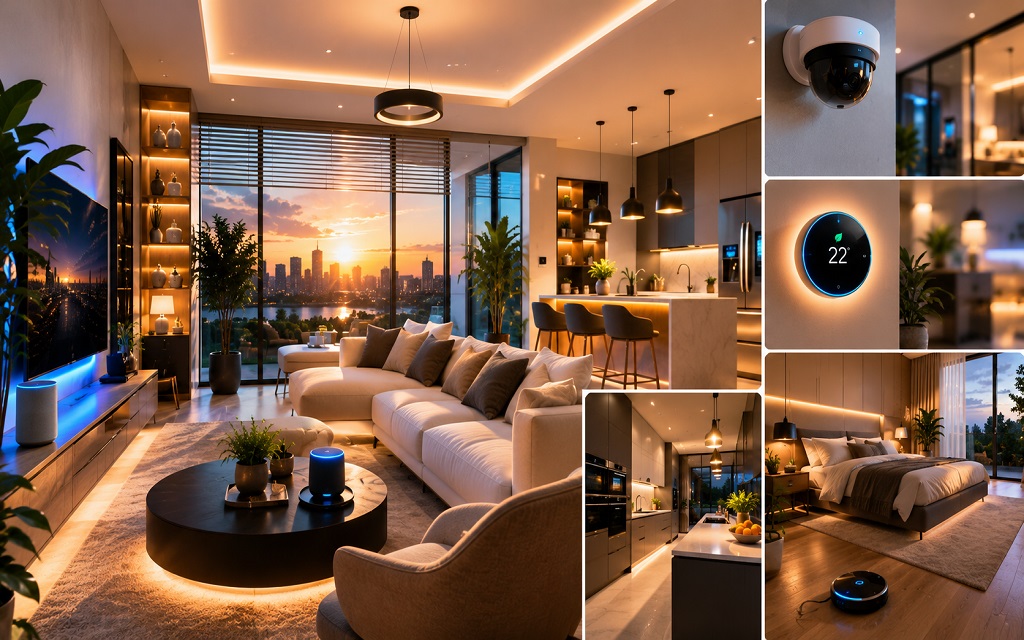
Smart home technology has moved beyond luxury and become a practical part of modern living. Homeowners now use connected devices to improve convenience, security, energy efficiency, and comfort without sacrificing interior design. Decoradtech Smart Home Ideas by DecoratorAdvice focuses on blending smart technology with attractive home aesthetics. The concept emphasizes creating living spaces that are both functional and visually appealing.
Decoradtech Smart Home Ideas by DecoratorAdvice refers to integrating smart home automation technologies such as intelligent lighting, climate control, security systems, and AI-powered devices into modern interior design. The goal is to create homes that are energy-efficient, secure, visually appealing, and easy to manage through connected ecosystems like Google Home, Amazon Alexa, Apple HomeKit, and Samsung SmartThings.
From smart lighting systems and automated climate control to intelligent security solutions, today’s homeowners have more options than ever to create a connected environment. When smart devices work together through platforms such as Google Home, Amazon Alexa, Apple HomeKit, and Samsung SmartThings, daily tasks become easier while homes become more efficient and responsive.
What Are Decoradtech Smart Home Ideas by DecoratorAdvice?
Decoradtech Smart Home Ideas by DecoratorAdvice refers to the integration of smart home technology into interior design and home improvement strategies. The approach combines home automation, connected devices, and modern décor principles to create living spaces that are stylish, efficient, and user-friendly.
Also, this approach focuses on integrating smart lighting, intelligent climate control, connected security systems, and AI-powered automation into attractive living spaces. Rather than placing technology at the center of the home, Decoradtech Smart Home Ideas by DecoratorAdvice emphasizes creating a balance between convenience, energy efficiency, security, and visual appeal.
Unlike traditional smart home setups that focus only on technology, Decoradtech-inspired solutions emphasize how devices fit naturally into the overall appearance of a home. Smart speakers blend into living rooms, automated lighting enhances ambiance, and intelligent thermostats improve comfort without disrupting design aesthetics.
The core goal is simple. Technology should improve daily life while complementing the home’s style rather than overwhelming it.
Why Smart Homes Are Becoming More Popular
The rapid growth of the Internet of Things (IoT) has made smart home devices more affordable and easier to install. Consumers increasingly value convenience, energy savings, security, and remote access, which explains why connected homes continue to gain popularity worldwide.
Convenience
Convenience remains one of the strongest reasons homeowners invest in smart technology. Voice assistants can control lights, adjust temperatures, play music, and manage routines through simple voice commands.
Smart plugs eliminate the need to manually switch appliances on and off. Automated routines can activate multiple devices simultaneously. A single command, such as “Good Morning,” can turn on lights, adjust blinds, start a coffee maker, and provide weather updates.
These small automations reduce repetitive tasks and simplify everyday living.
Energy Efficiency
Rising energy costs have encouraged homeowners to adopt smarter energy management systems. Smart thermostats learn household habits and adjust temperatures automatically to reduce unnecessary heating and cooling.
Smart lighting systems ensure lights operate only when needed. Occupancy sensors and scheduling features help eliminate wasted electricity. Many homeowners notice measurable reductions in monthly utility bills after implementing smart energy solutions.
Home Security
Modern smart homes provide advanced protection through connected security devices. Video doorbells, smart locks, security cameras, and motion sensors allow homeowners to monitor their property in real time.
Instant mobile notifications provide awareness of suspicious activity even when homeowners are away. However, remote access features also eliminate uncertainty about whether doors were locked or security systems activated.
Remote Control
Remote accessibility has transformed home management. Smartphones now serve as centralized control hubs for connected devices.
Whether traveling for business or enjoying a vacation, homeowners can monitor cameras, adjust temperatures, switch off appliances, and manage security systems from virtually anywhere with an internet connection.
Popular Smart Home Ecosystems Used in Decoradtech Smart Home Ideas by DecoratorAdvice
Most modern smart homes rely on centralized ecosystems that connect multiple devices into a single network.
The most popular platforms include:
- Google Home for voice control, automation routines, and device management.
- Amazon Alexa for smart home automation and voice commands.
- Apple HomeKit is for users invested in the Apple ecosystem.
- Samsung SmartThings for broad compatibility across connected devices.
These systems operate through the Internet of Things, allowing devices to communicate and automate everyday tasks.
Traditional Homes vs Smart Homes
| Feature | Traditional Home | Smart Home |
|---|---|---|
| Lighting | Manual operation | Automated scheduling |
| Security | Basic locks | Smart monitoring |
| Temperature Control | Manual adjustment | Intelligent automation |
| Energy Management | Limited tracking | Real-time monitoring |
| Remote Access | Not available | Smartphone control |
| Convenience | Lower | Higher |
Best Decoradtech Smart Home Ideas for Every Room
Smart technology works best when tailored to each space within the home. Different rooms require different automation strategies to maximize comfort and functionality.
Living Room
The living room serves as the primary entertainment and gathering space. Smart TVs, voice-controlled speakers, automated lighting, and motorized blinds can transform the room into a personalized entertainment center.
Smart lighting scenes create different moods for movie nights, family gatherings, or reading sessions. Voice assistants provide hands-free control over entertainment systems and connected devices.
Kitchen
The kitchen benefits significantly from automation. Smart refrigerators track food inventory, while smart ovens allow remote monitoring and temperature adjustments.
Voice assistants help manage shopping lists, cooking timers, and recipe instructions. Smart plugs can automate coffee makers and small appliances to improve efficiency during busy mornings.
Bedroom
Comfort and relaxation are priorities in the bedroom. Smart blinds can open each morning gradually to simulate natural sunrise conditions.
Smart lighting systems can automatically dim before bedtime. Climate control devices maintain optimal sleeping temperatures, while white noise generators and smart speakers support healthier sleep routines.
Bathroom
Smart mirrors, automated exhaust fans, and motion-activated lighting improve convenience and efficiency in modern bathrooms.
Temperature-controlled smart showers provide personalized comfort settings. Moisture sensors can also help prevent humidity-related issues that may affect indoor air quality.
Home Office
Remote work has increased demand for smarter workspaces. Smart lighting reduces eye strain by adjusting brightness throughout the day.
Voice assistants help manage schedules and reminders. Also, smart air quality monitors improve comfort and productivity by tracking indoor environmental conditions.
Smart Home Adoption and Market Trends
Growing consumer demand continues to drive smart home adoption worldwide. Homeowners increasingly invest in connected technologies to improve comfort, security, and energy efficiency.
Research consistently shows that:
- Smart thermostats can reduce heating and cooling energy consumption.
- Smart LED lighting uses significantly less electricity than traditional bulbs.
- Connected security systems improve remote monitoring capabilities.
- Homebuyers increasingly value smart home features when evaluating properties.
These trends help explain the growing popularity of Decoradtech Smart Home Ideas by DecoratorAdvice among modern homeowners.
Smart Lighting Ideas
Smart lighting remains one of the most effective entry points into home automation. It offers immediate convenience, energy savings, and aesthetic improvements.
Ambient lighting systems allow homeowners to create customized moods throughout the home. Adjustable brightness and color temperatures support different activities and preferences.
Motion sensors enhance efficiency by automatically turning lights on when someone enters a room and switching them off when spaces become vacant.
Voice control through Amazon Alexa, Google Assistant, or Apple Siri provides hands-free operation. Users can control entire lighting groups through simple spoken commands.
LED automation further improves efficiency. Smart LED bulbs consume less electricity than traditional lighting while offering advanced scheduling, dimming, and scene customization capabilities.
Smart Climate Control Solutions
Climate management plays a major role in comfort and energy efficiency.
Smart thermostats learn household patterns and automatically optimize heating and cooling schedules. Popular systems from Nest and Ecobee help reduce energy consumption while maintaining comfortable indoor temperatures.
Air quality sensors monitor pollutants, humidity, carbon dioxide levels, and airborne particles. Real-time monitoring helps homeowners maintain healthier indoor environments.
Energy management systems analyze household energy usage and identify opportunities for improved efficiency. These systems provide valuable insights into consumption patterns and long-term savings opportunities.
Smart Security Upgrades
Security remains one of the most compelling applications of smart home technology.
Video doorbells provide live video feeds and two-way communication with visitors. Homeowners can answer doors remotely and monitor package deliveries in real time.
Smart locks eliminate traditional keys and enable secure remote access management. Temporary access codes can be assigned to guests, contractors, or family members.
Security cameras offer continuous monitoring and cloud-based video storage. Advanced systems include facial recognition, night vision, and intelligent activity detection.
Motion detection technology adds another layer of protection by identifying unusual movement and triggering alerts when necessary.
Together, these technologies create a comprehensive security ecosystem that improves awareness and peace of mind.
AI-Powered Smart Home Automation
Artificial intelligence has expanded the capabilities of modern smart homes.
Voice assistants such as Google Assistant, Amazon Alexa, and Siri provide natural language interaction with connected devices. Users can control complex routines through simple commands.
Predictive routines allow smart systems to learn behavioral patterns. Lights, thermostats, and appliances can automatically adjust based on daily habits.
AI scheduling helps automate recurring tasks without constant user input. Systems can optimize lighting schedules, climate control settings, and appliance operation based on occupancy patterns.
Energy optimization uses machine learning algorithms to reduce waste and improve efficiency. Smart systems continuously analyze usage patterns and adjust performance to lower operating costs.
As AI technology advances, connected homes are becoming increasingly proactive rather than simply reactive.
Budget-Friendly Smart Home Ideas
Creating a smart home does not require a massive investment. Homeowners can start small and expand gradually.
Under $100
A basic smart home setup can include smart plugs, smart LED bulbs, and a voice assistant device. These products provide immediate automation benefits while remaining affordable for most households.
Under $500
Mid-range setups often include smart speakers, video doorbells, smart thermostats, and lighting automation systems. This budget allows homeowners to automate multiple aspects of daily living.
Premium Setup
Premium smart homes integrate security systems, climate control, automated blinds, smart appliances, multi-room audio systems, and advanced AI-powered automation platforms.
These comprehensive ecosystems deliver maximum convenience, efficiency, and customization.
Common Mistakes to Avoid
Many homeowners purchase devices without considering compatibility. Before investing, verify that devices support your preferred ecosystem, whether Google Home, Apple HomeKit, Amazon Alexa, or SmartThings.
Weak Wi-Fi coverage can also create reliability issues. A strong network infrastructure remains essential for stable smart home performance.
Some homeowners overlook cybersecurity. Strong passwords, multi-factor authentication, and regular firmware updates help protect connected devices from unauthorized access.
Another common mistake involves over-automation. Excessive automations can create confusion rather than convenience. Start with practical use cases and expand gradually.
Benefits of Smart Home Technology
Smart home technology delivers measurable advantages beyond convenience alone.
Homeowners gain greater control over energy consumption, security systems, and household operations. Automated devices reduce repetitive tasks and improve daily efficiency.
Remote access provides peace of mind while traveling. Smart security features increase property protection. Energy management tools help reduce utility expenses over time.
Perhaps most importantly, smart homes create personalized living environments that adapt to individual preferences and lifestyles. The result is a more comfortable, efficient, and connected home experience.
The Future of Decoradtech Smart Home Ideas by DecoratorAdvice
The next generation of smart homes will rely more heavily on Artificial Intelligence and predictive automation. Future systems will learn household behaviors, optimize energy usage automatically, and provide more personalized experiences.
Emerging trends include:
- AI-powered automation
- Predictive energy management
- Matter-compatible devices
- Smart health monitoring
- Advanced voice assistants
- Sustainable smart home technologies
As these innovations continue to develop, Decoradtech Smart Home Ideas by DecoratorAdvice will likely evolve toward even more seamless integration between technology and interior design.
FAQs
What is Decoradtech Smart Home Ideas by DecoratorAdvice?
It is a smart home concept that combines home automation technology with modern interior design principles to create efficient, secure, and visually appealing living spaces.
Which smart home ecosystem is best?
Google Home, Amazon Alexa, Apple HomeKit, and Samsung SmartThings are among the most popular ecosystems. The best choice depends on device compatibility, user preferences, and existing technology investments.
Can smart home devices reduce electricity bills?
Yes. Smart thermostats, automated lighting, occupancy sensors, and energy monitoring systems can help reduce unnecessary energy consumption and lower utility costs.
Are smart homes secure?
Smart homes can be highly secure when homeowners use strong passwords, enable two-factor authentication, update device firmware regularly, and secure their Wi-Fi networks.
Is a smart home worth it in 2026?
For many homeowners, smart homes offer improved convenience, security, energy efficiency, and long-term property value.
What smart devices increase home value?
Smart thermostats, video doorbells, security cameras, smart locks, and energy management systems are among the most desirable upgrades.
Can renters use smart home devices?
Yes. Smart plugs, smart bulbs, voice assistants, and portable security devices can often be installed without permanent modifications.
Final Thoughts
Decoradtech Smart Home Ideas by DecoratorAdvice demonstrate how modern automation and interior design can work together to create more comfortable, secure, and efficient living spaces. Whether starting with smart lighting and plugs or building a fully connected ecosystem, homeowners can gradually adopt technology that improves daily life while maintaining a stylish home environment.
As AI, IoT, and home automation continue to evolve, smart homes are becoming an increasingly practical investment for the future.

Ahsan Iqbal is a content writer covering technology updates, gaming topics, and general blog content. His work focuses on explaining tech-related subjects in a simple and understandable way using publicly available information. Content is written for general informational purposes only.